 Feel Mongolia Group Horse Riding Tour
 Gobi Desert and Central Mongolia Group Tour Package
 Discover the Gobi Desert Group Travel
 Explore Mongolia Group Tour
 Why View Mongolia Group Tour Operator?
 Mongolia Monthly Weather
 Mongolia Group Tour Terms & Conditions
 FAQ Before Travel Mongolia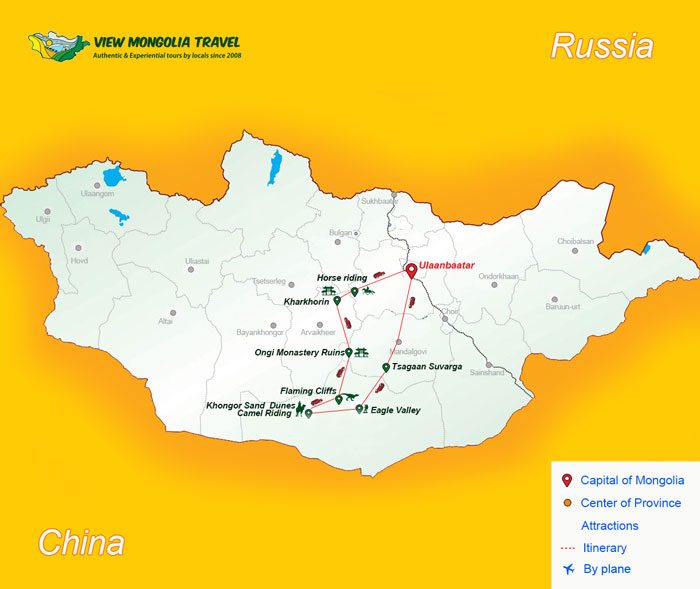
Orkhon Valley & Vastness of the Gobi Desert Trip
Overview
Are you short of time? Nevertheless, do you want to discover many of the Gobi Desert’s famous highlights?
If yes, you landed in the right place. On our Orkhon Valley & Vastness of the Gobi Desert Trip, you will spend 7 activity-packed and rich in experiences days while traveling to the most scenic areas of the Gobi Desert, the Orkhon Valley, and part of central Mongolia.
To name just a few, you will travel to colorful Tsagaan Suvatga cliffs, hike in serene and verdant Eagle Valley, and challenge yourself to climb the tall Khongor dunes, which provide fascinating scenery of the Gobi desert. Additionally, explore ancient monasteries and historical relics, visit nomads, and ride horses and camels.
Day 1: Arrive in Ulaanbaatar
Our driver meets you at the airport and transfers you to a centrally located hotel. Have a free day to relax and discover the city on your own while staying in a hotel in a good location.
Accommodation: 3* hotel
Driving distance: 55 km
Day 2: Tsagaan Suvarga colorful mud cliffs
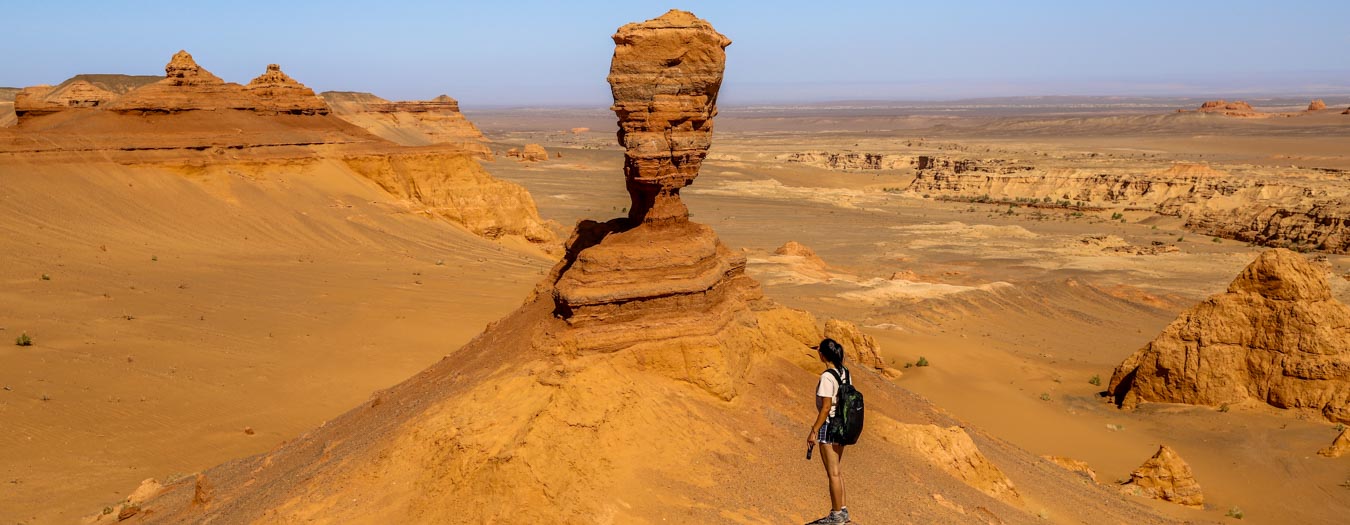
Your guide and driver will pick you up from the hotel at 8:15 AM. Start the Gobi desert group trip driving on a paved road heading to Tsagaan Suvarga, which means White Stupa, one of the most famous highlights of the Gobi desert. Tsagaan Suvarga is a spectacular natural formation of colorful, massive mud cliffs that look like stupas. Hike through the colorful cliffs to see its various angles and photo opportunities.
Accommodation: Ger camp
Meals: Breakfast, Lunch, Dinner
Driving distance: 420 on the paved and rough roads takes 7 to 8 hours
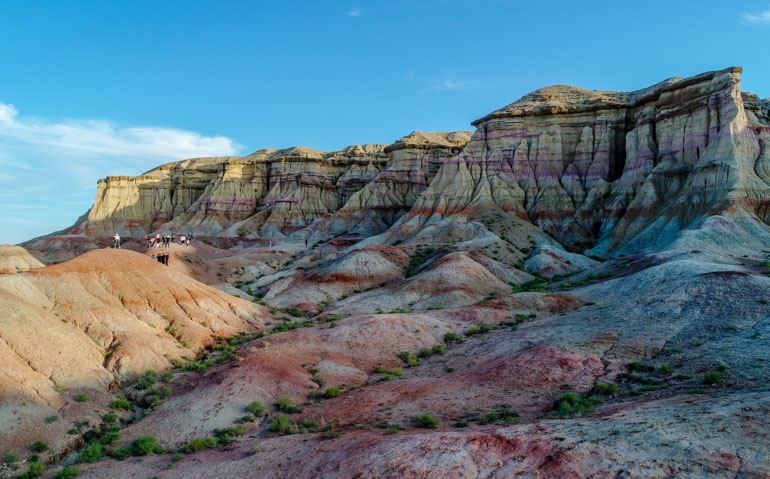
Day 3: Gobi Gurban Saikhan Mountain National Park, hiking in Eagle Valley
After breakfast, we travel more to the south, heading to the Gobi Gurban Saikhan Mountain Range National Park, the end of the Altai Mountains. There are numerous amazingly picturesque, lush green valleys, canyons, and crystal-clear streams.
You will check in at a ger camp and have lunch. A short tour to attractive Yoliin Am/Eagle Valley. The valley is named after its primary resident, the Bearded Eagle, also known as the Lammergeier. After reaching the parking area, we gently hike along the mountain creek, which leads the way into the depths of a sheer rock canyon. The canyon does not accept sunlight. Therefore, it has ice until the end of June. The hiking continues for 2.5 to 3 hours in two ways. Return to the ger camp before dinner and have a free evening.
Accommodation: Ger camp
Meals: Breakfast, Lunch, Dinner
Distance: 230 km driving on the paved and rough roads 5 hours
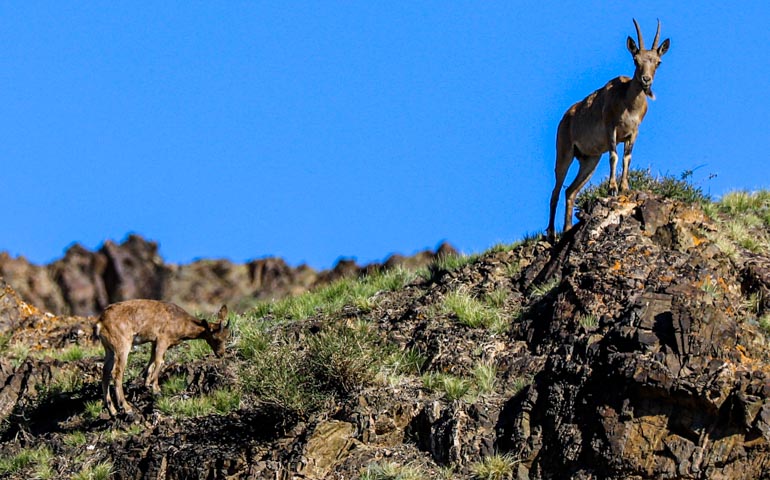
Day 4: Climb Khongor Sand Dunes, visit Gobi desert nomads and camel riding
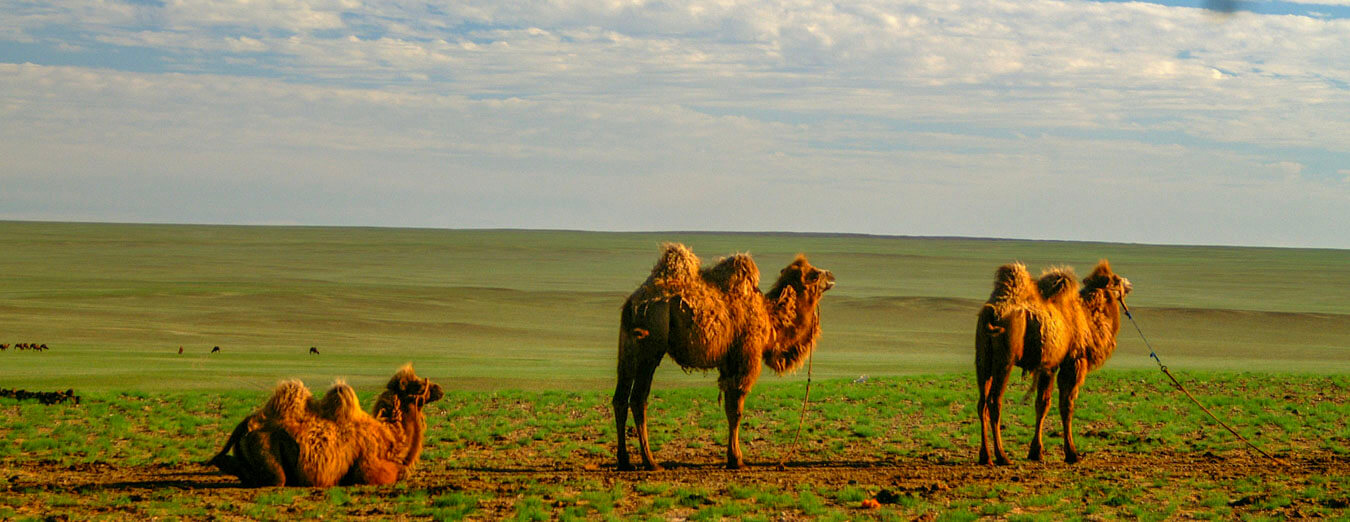
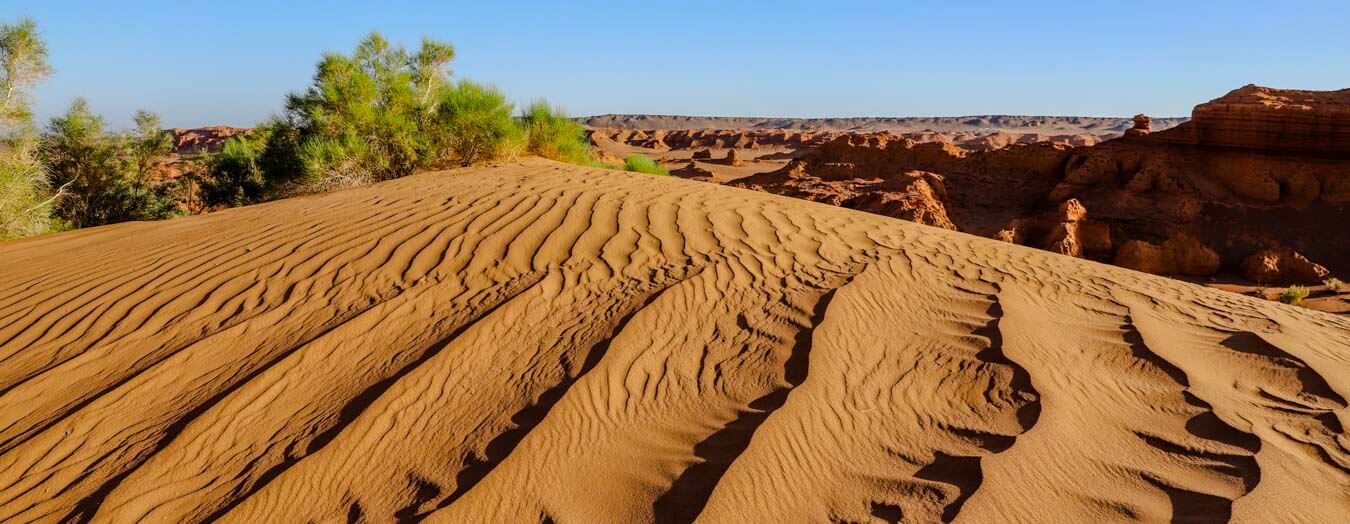
The journey will continue to the tall Khongor dunes. After reaching the dunes, check in at a ger camp and have lunch, followed by a visit to a nomad family to ride camels. Next, climb the Khongor dune. If you can climb one of the tallest dunes, spread the sand against the wind to find out why locals call the sand dunes “Singing Sand.” The views from the top of the dunes are fantastic.
Accommodation: Ger camp
Meals: Breakfast, Lunch, Dinner
Distance: 190 km driving on the rough roads 4,5 to 5 hours
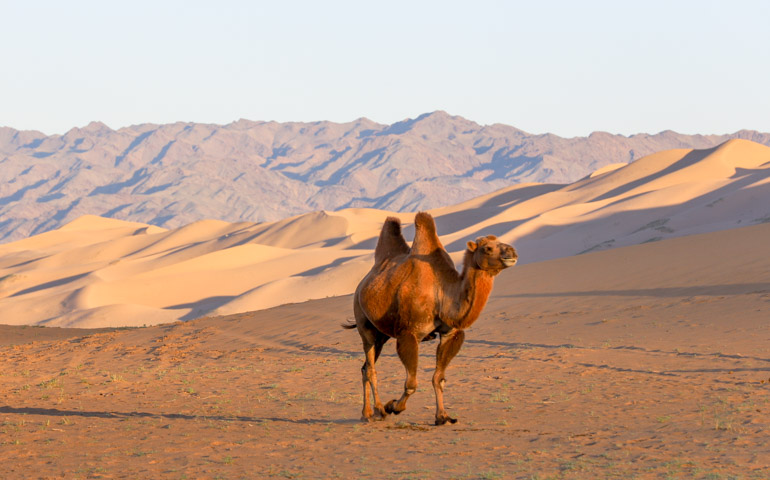
Day 5: Flaming Cliffs – the famous paleontological excavation site
First, you travel to the Khavtsgait Valley in the West Saikhan Mountain of the Gurban Saikhan Mountain National Park to explore some rock drawings dating back to the Late Bronze Age and early Iron Age. Seeing the rock drawing requires us to hike 1 km on the return way. Continue to travel to a ger camp just 1 km from the Flaming Cliffs. After lunch, enjoy a free afternoon, the 360° views of the steppe, and make your discovery. We will travel to the Flaming Cliffs in the late afternoon for good photo opportunities as the sun goes down. The Flaming Cliffs are red sandstone cliffs and canyons where American explorer Roy Chapman Andrews discovered dinosaur remains and eggs, which made a crucial contribution to paleontological research. Thus, the Flaming Cliffs are among the most famous paleontological sites in the world. You also see the Gobi Desert tree grove named “Bayanzag.” Bayanzag means “rich in saxaul trees.” This tree only grows in the Central Asian Gobi.
Accommodation: Ger camp
Meals: Breakfast, Lunch, Dinner
Driving distance: 230 km driving on the rough roads 5,5 hours
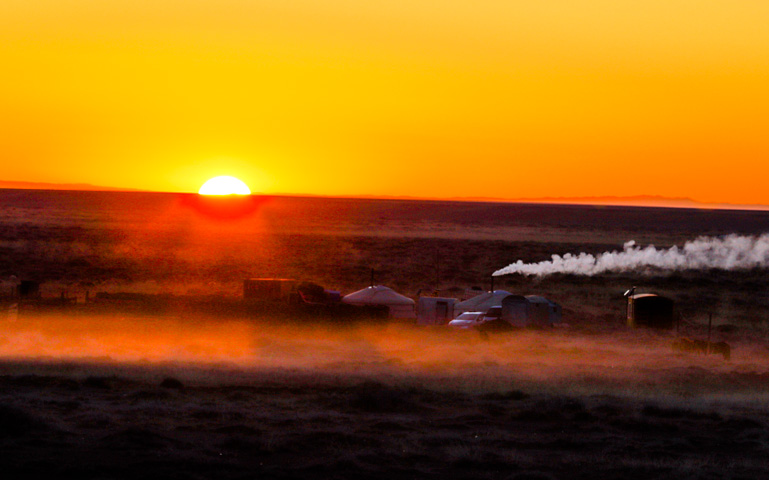
Day 6: Drive to Ongi Monastery on the open steppes
Drive first through the slate mountains, then along the 80 km Ongi steppes towards Ongi Monastery. Ongi Monastery was one of the seven biggest monasteries in Mongolia. Two separate monasteries consisted of more than 30 temples on the shores of the Ongi River, surrounded by the Gobi Desert mountains. The communists destroyed the monastery in the 1930s purge. Now, the ruins of the monasteries cover a vast area. Visit a new active temple and a ger museum, and explore the monastery ruins. Climbing a nearby mountain for views of the surrounding area is an option.
Accommodation: Ger camp
Meals: Breakfast, Lunch, Dinner
Driving distance: 160 km driving on the rough roads 4 to 4.5 hours
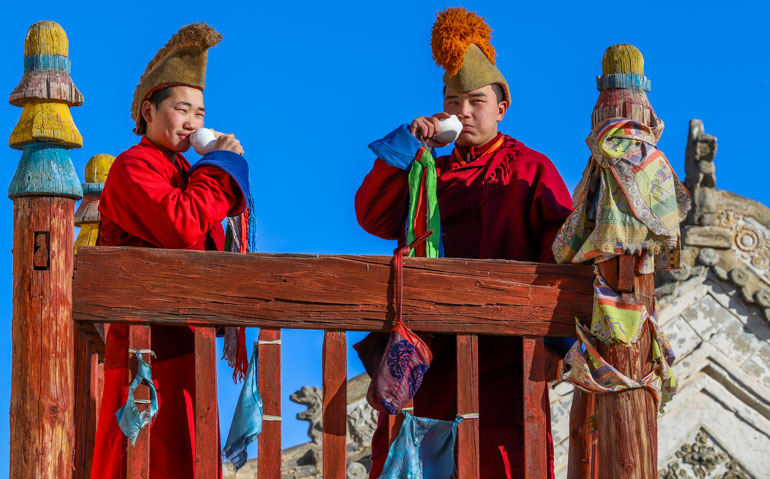
Day 7: Kharkhorin, Erdenezuu Monastery
Today’s tour takes place in the transition zone between the Gobi Desert and the mountain steppes. The Kharkhorin and Erdenezuu tour offers insight into the history of the Great Mongol Empire, the largest land empire in history, while exploring the country from a religious perspective. Kharkhorin and Erdenezuu are part of the World Heritage Site, the Orkhon Valley. You will see valuable religious artifacts in the Erdenezuu temple museums, visit an active temple, observe local religious practices, and view the stunning architecture of the monastery. You also visit the Kharakhorum Museum, which displays remnants of the ancient city and some historical relics.
Accommodation: Ger camp
Meals: Breakfast, Lunch, Dinner
Distance: 260 km driving on the rough roads 6 hours
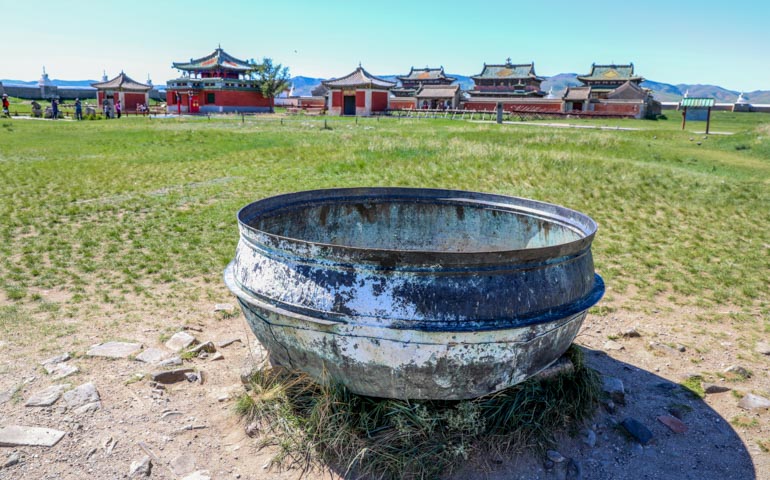
Day 8: Visit nomads, horse riding and drive back Ulaanbaatar
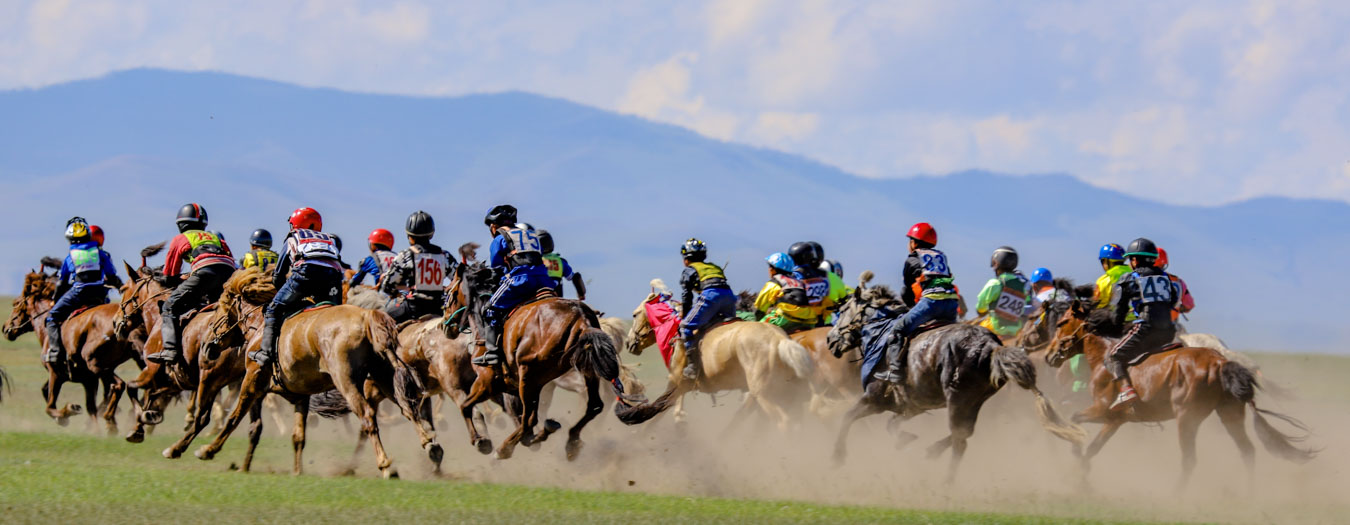
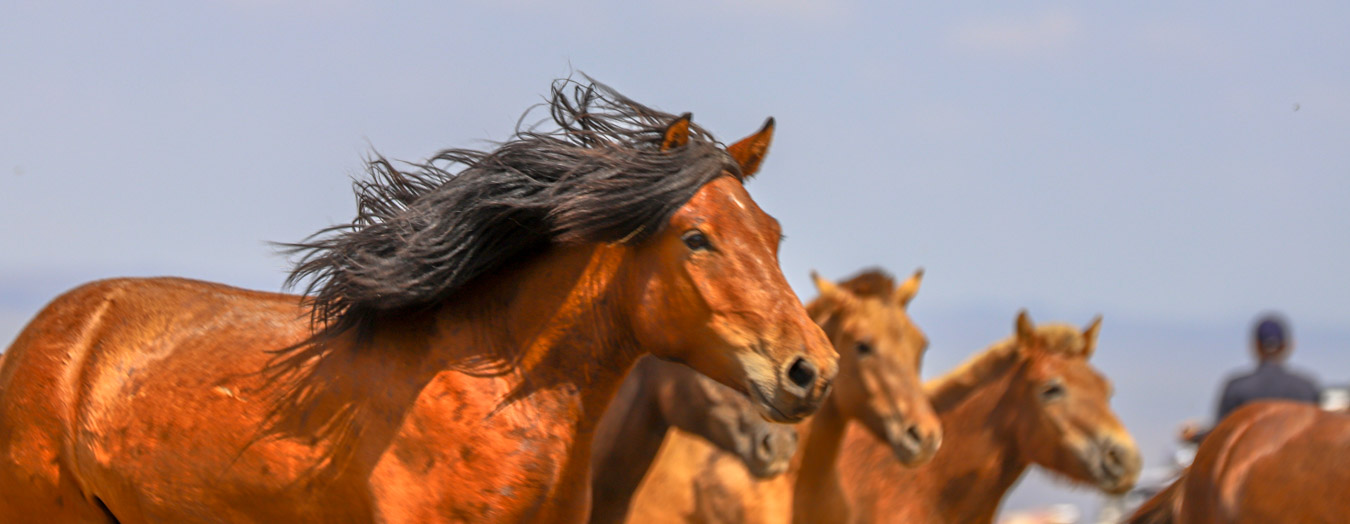
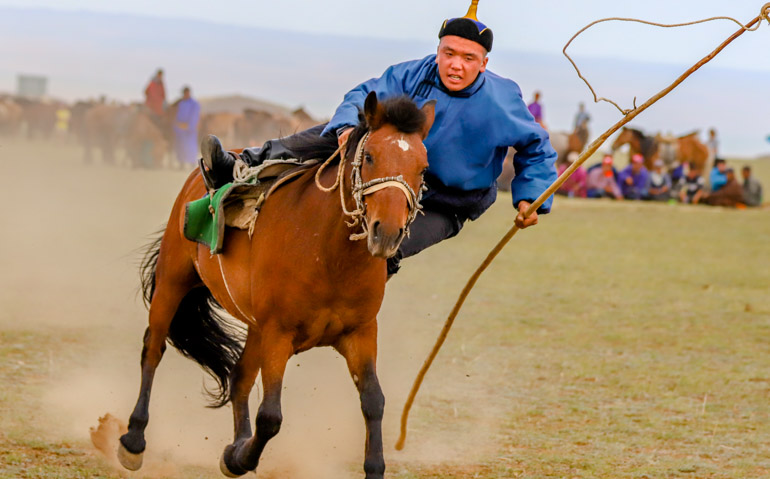
Today is the last day you will spend in the beautiful countryside of Mongolia. On your way to Ulaanbaatar, visit a horse-herding nomad family and ride horses. You also join the nomads for nomadic lunch. Arrive in Ulaanbaatar and transfer to your accommodation.
Meals: Breakfast, Lunch
Driving distance: 360 km mainly on the paved roads takes 6 to 6.5 hours
TOUR PRICE PER PERSON
Group tour price: 1268$ per person
Single supplement: 320$
DISCOUNTS
- For children of a family trip
- One free space for every 16 pax (Regards private group tour)
- Group traveler discount (Regards private group tour)
- 1 nights in *** hotel
- 6 nights in ger camps
- 7 Breakfast, 7 lunch , 6 dinner
- English speaking guide
- Van transfer
- 0.5*2 bottled water per person per day
- Entry fees to national parks and museums
- Horse & camel riding
- Arrival transfer
The tour includes:
- Items of personal use
- International travel
- Visa fee
- Travel & medical insurance
- Single supplements
The tour excludes:
Is the Orkhon Valley & Gobi Desert trip suitable for you
On this Gobi Desert & Orkhon Valley trip, you will travel approximately 1850 km on paved and rough roads. The daily driving duration is 4.5-6 hours. The longest driving is on day 1, when you travel to the depths of the Gobi desert in a single day – 420 km takes 7 to 7.5 hours.
The tour does not include demanding physical activities except for 1-3 hours of gentle hiking on some days. The group members could choose to climb one of the higher dunes of Khongor, remain at the bottom, or climb the lower dunes. Local equestrians will support the horse and camel riding except for your guide. If you are uncomfortable with the riding, inform your guide that you will not ride the horse or request a helper to lead your rein.
Accommodation
You will stay in the ger camps for 6 days on this Gobi Desert group trip. All accommodations are twin-share unless solo travelers pay an extra fee and request a single supplement. We always choose the best location and best service ger camps available within the budget. The ger camp is a traditional dwelling located close to the main attractions.
The ger camps have restaurants that serve western and Mongolian cuisines.
Regarding bathrooms, the western WC and showers are in a separate block, shared with other travelers. Few ger camps offer private bathroom gers at an additional fee of $50–$55 per person per night.
Some ger camps are connected to the central electricity. In contrast, others obtain electricity from generators, solar power, or wind energy. Learn more about the ger camps and see pictures
What meals will I eat during the Orkhon Valley & Gobi Desert Trip?
The tour includes 7 breakfasts, 7 lunches, and 6 dinners. In the countryside, ger camps serve some European and Mongolian meals. Meat is the main component for lunch and dinner, accompanied by vegetables, salads, and soups. There will be more meat in traditional Mongolian meals.
Breakfast: A typical breakfast consists of tea, coffee, bread, jam, butter, eggs, sausage, cookies, cheese, fruits/vegetables, and cereals.
Lunch: They serve some salads, Mongolian soups, main courses (pasta, rice, vegetables, beef/mutton/chicken/fish near lakes/rivers, traditional meals), and dessert with tea.
Dinner; Salad, a main course, dessert, and tea will be served.
Are you a vegetarian or have a dietary restriction? If you are a vegetarian or have dietary restrictions, please inform us beforehand. We will arrange the meals accordingly.
Water: We will provide 2 to 3 bottled water, daily.
Meals with the nomads: On Day 8, you will try a Mongolian lunch with the nomads.
Guides
An English-speaking guide will lead the group. They are all friendly and helpful; most were born and raised in the Mongolian countryside. Therefore, they have a good knowledge of every aspect of Mongolia and at least 3 years of guiding experience. During the camel ride, a local guide will support you.
Transportation
Full-time Japanese van Toyota Hiace is the main vehicle for the group tour. Depending on the group size, either the Mitsubishi Delica or the Hyundai Starex may serve.
When is the best time to take the Orkhon Valley & Gobi Desert Trip
The best time to take the Orkhon Valley & Vastness of the Gobi Desert Trip is between 15 May and 15 October. Therefore, group tours are available during the above period.
We recommend May, the beginning of June, September, and the beginning of October for travelers who prefer cooler weather and less crowded.
May and September: Please expect daytime temperatures between +8°C and +25°C, and nighttime temperatures between +3°C and +17°C. Snowfall may occur in May and September.
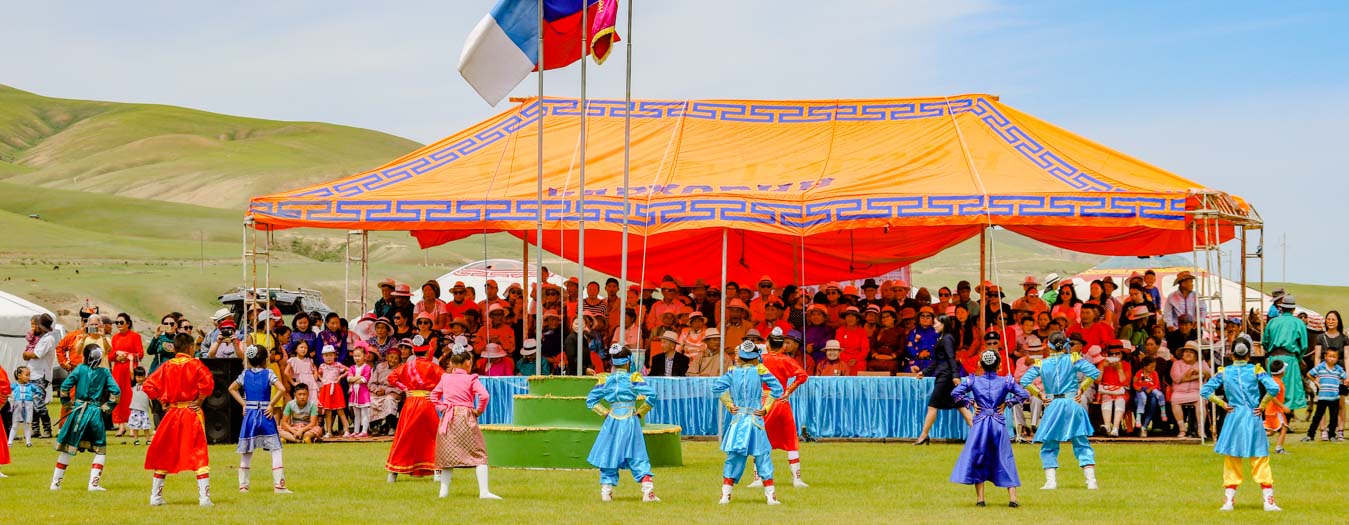
July and August: The beginning of August and July are the hottest and wettest. Those months are busy due to the national holiday Naadam festival. The average daytime temperature is +22°C to +35°C, and the average nighttime temperature is +14 °C to +20 °C.
The second half of June and August is a perfect time to travel to the Gobi Desert in terms of weather. It’s not too hot, not cool, and not rainy. The average daytime temperature is +14°C to +30°C, and the average nighttime temperature is +8 °C to +15 °C.
What to bring and wear?
As the weather in Mongolia is unpredictable and varies greatly, we recommend packing according to the guidelines below
• Torch/headlamp will be helpful when going to the bathrooms in the evenings and at night while staying at the ger camps
• Lightweight windproof/waterproof jacket
• Lightweight travel trousers that can be unzipped into shorts would be ideal for most summer days.
• T-shirts and long-sleeved t-shirts will be comfortable and help you protect your arms from the sun and stay warm on chilly days.
• A sturdy pair of walking sandals and boots will be useful when you hike. If not the hiking shoes, bring sneakers and sandals. Some of the ger camps do not have slippers in their gers
• Pajamas/tights or something similar to stay warm at night.
• Shorts and whatever suitable at high up to +38°C during daytime in summer months and +8 to + 18°C in the evening/night temperature. The temperature decreases significantly during rain.
• Bringing your eyeglasses is preferable instead of lenses on dusty roads
• Sun cream, lip balm, sunglasses, and a sunhat are vital
• Some pills for common symptoms include travel sickness pills, allergy pills (there is a vast expanse of grasslands), Pepto-Bismol for the inevitable upset stomach, and antibiotic cream for cuts, scratches, insect bites, etc. The pills should be carried in their original, clearly labeled container in your handbag. If necessary, consult with the Mongolian Embassy.
• A watch or alarm clock can be useful if your mobile phone does not have enough charge or you do not want to use your phone
• Both backpacks and suitcases work. The bell boys and service staff of ger camps will help you transfer your luggage between the ger and the parking area
• Shampoo, lotions, deodorant, and toothpaste are all available extensively in Ulaanbaatar. However, they are not available at ger camps. Therefore, bring your supply
• The ger camps provide big and small towels. Bringing dry/wet tissues and hand sanitizer will be handy. Particularly during some critical stops in the countryside (call of nature)
• Travel and medical insurance, passport, and other documents
• Camera with a spare battery or with a mobile charger.
• Verify the permitted power bank watt-hours with your airline and ensure you pack it in your carry-on bag.
• Resealing (Ziploc) plastic bags – to protect your documents, money, camera, binoculars, and other items from wetness, sand, and dust
• Check here for vaccinations and health information needed to travel to Mongolia
• If you do not mind, bring small gifts for nomadic children, but it is not mandatory. The gift ideas are some candies, biscuits, or school stationery.